LIMITING EMPTY TRIPS, REDUCING TRANSPORTATION COSTS
According to research by the Asian Development Bank, logistics costs in Vietnam currently account for over 20% of GDP, with transportation costs making up approximately 60% of that figure.
Compared to other countries globally and within the region, this cost level is considered very high - a situation primarily driven by an outdated transport organization system, where 30-50% of freight vehicles travel empty. Furthermore, various modes of transport lack seamless integration, and "informal" costs remain prevalent. These factors directly and negatively impact the competitiveness of goods and services - a critical concern as Vietnam actively pursues global economic integration through numerous trade liberalization agreements, such as the AEC, the TPP, and various other bilateral pacts.
To address existing weaknesses, as early as 2013, the Ministry of Transport directed the development and implementation of initiatives aimed at reforming the transport sector. These included a restructuring plan for the transport sector, as well as specific proposals to modernize road, maritime, and air transport operations. Among these solutions was the initiative to establish a transport exchange platform. In December 2015, the first such exchange was launched, with high expectations that it would achieve multiple objectives - such as helping businesses reduce "empty-leg" trips (vehicles traveling empty in one direction), lowering logistics and transport costs, decreasing freight rates, and mitigating environmental pollution.

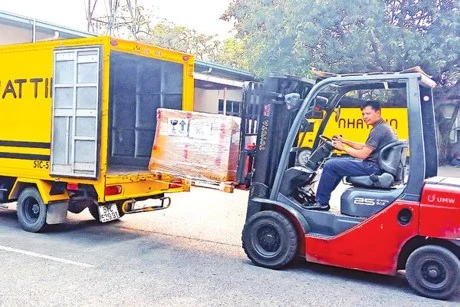
Transporting goods safely and at a reasonable cost is the desire of all shippers - Photo: Khanh Linh
In the more than four months since its launch, while it has yet to reach impressive figures in terms of the volume of goods traded, the country’s first transport exchange platform has demonstrated its effectiveness through successful transactions, attracting a significant number of transport entities and organizations. However, as this is an entirely new model, it is natural that many businesses remain unfamiliar with it, opting instead to adopt a "wait-and-see" approach. Furthermore, existing methods of conducting business and forming partnerships within the transport sector - often deeply rooted in established, complex webs of mutual interest - cannot be transformed overnight.
For this reason, some argue that the achievements of the transport exchange platform to date represent a successful start; it has introduced a new mode of transaction that aligns with modern trends, offering greater transparency and higher efficiency. Consequently, further promoting and developing the transaction models on this platform is an inevitable step forward - one that will help reduce transport costs and enhance the competitiveness of individual businesses, as well as the national economy as a whole, within the context of increasingly deep and broad global integration.
By Tien Manh - Giao Thong Newspaper